Enduring Wisdom, Ever-Flourishing Heritage—The Millennial Glory and Contemporary Responsibility of the Università degli Studi di Roma
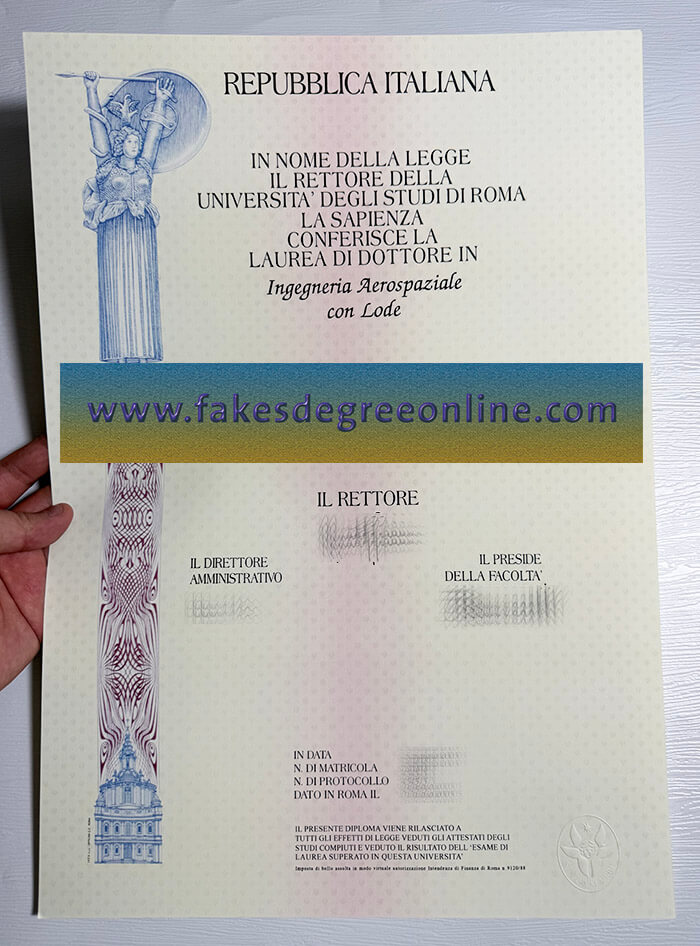
Embedded within the urban fabric of Rome, Italy, stands an academic sanctuary spanning seven centuries—an institution named after “Wisdom,” sustained by the pulse of tradition, and propelled by the wings of innovation: the Università degli Studi di Roma, commonly known as “La Sapienza” (Sapienza University of Rome). Get a Università degli Studi di Roma diploma online. As one of the world’s oldest universities, #Make a Università degli Studi di Roma degree online. it has not only borne witness to the rise and fall of the city of Rome but, over the course of its long history, has also emerged as a benchmark for higher education and scientific innovation across Europe and the globe, using the light of wisdom to illuminate the path of human civilization.
The history of Sapienza University is an epic narrative—one that moves in perfect synchronicity with the times and evolves in symbiosis with civilization itself. In 1303 AD, Pope Boniface VIII issued a papal bull formally establishing this institution. Originally named “Studium Urbis” (The City School), it was founded with the aim of cultivating individuals endowed with both religious piety and secular knowledge—a mission that, even then, laid the foundation for its enduring educational philosophy of “inclusiveness, truth-seeking, and pragmatism.” In the 17th century, the institution was officially renamed “La Sapienza” (meaning “Wisdom”); this title served not only as a precise articulation of its academic aspirations but also became the spiritual totem guiding it across the millennia. From the intellectual enlightenment of the Renaissance to the technological innovations following the Industrial Revolution, and onward to the era of contemporary globalization, Sapienza University has remained steadfast in its original academic mission. How do i buy Università degli Studi di Roma certificate? Constantly innovating amidst the tides of change, it preserves the profound heritage of classical scholarship while consistently standing at the vanguard of the modern age, serving as a cultural bridge connecting the past with the future. Today, it has evolved into Europe’s largest university, comprising 11 faculties and 63 departments. With nearly 120,000 students pursuing their studies and over 8,000 faculty and staff members dedicated to teaching and research, it has established a comprehensive academic ecosystem spanning the full spectrum of disciplines—including the humanities, social sciences, natural sciences, engineering, and medicine—thereby sustaining the vibrant vitality of this thousand-year-old institution.
Academic excellence constitutes the core essence of Sapienza University—and, indeed, the very bedrock of its global renown. As Italy’s premier public research university, Sapienza University of Rome holds a world-leading position across numerous academic disciplines, garnering particular renown and distinction in the fields of the humanities, social sciences, and natural sciences. Purchase a Università degli Studi di Roma degree online. In the 2026 *Times Higher Education* (THE) World University Rankings by Subject, the university’s Arts and Humanities program ranked 33rd globally and 1st in Italy—a top national position it has consistently held since 2015. Can i get to buy Università degli Studi di Roma certificate? Furthermore, its Law program saw a significant leap in the rankings, climbing 14 places from the previous year to reach 61st worldwide, thereby demonstrating strong developmental momentum.
In the realm of natural sciences, Sapienza University shines even more brightly; having produced over ten Nobel laureates, it has truly earned its reputation as a “cradle of Nobel laureates.” From Guglielmo Marconi, the inventor of radio (1909 Nobel Prize in Physics), to Enrico Fermi, who ushered in a new era of nuclear physics research (1938 Nobel Prize in Physics), and extending to Giorgio Parisi—who was awarded the 2021 Nobel Prize for his discovery of “the interplay of disorder and fluctuations in physical systems from atomic to planetary scales”—each scholar has utilized their intellect to push the boundaries of human knowledge. How much to buy Università degli Studi di Roma diploma? Moreover, numerous other Nobel laureates—such as Daniel Bovet (1957 Nobel Prize in Physiology or Medicine) and Emilio Segrè (1959 Nobel Prize in Physics)—either graduated from or taught at the university; their research findings have not only reshaped the trajectory of their respective disciplines but have also profoundly influenced the advancement of human society.