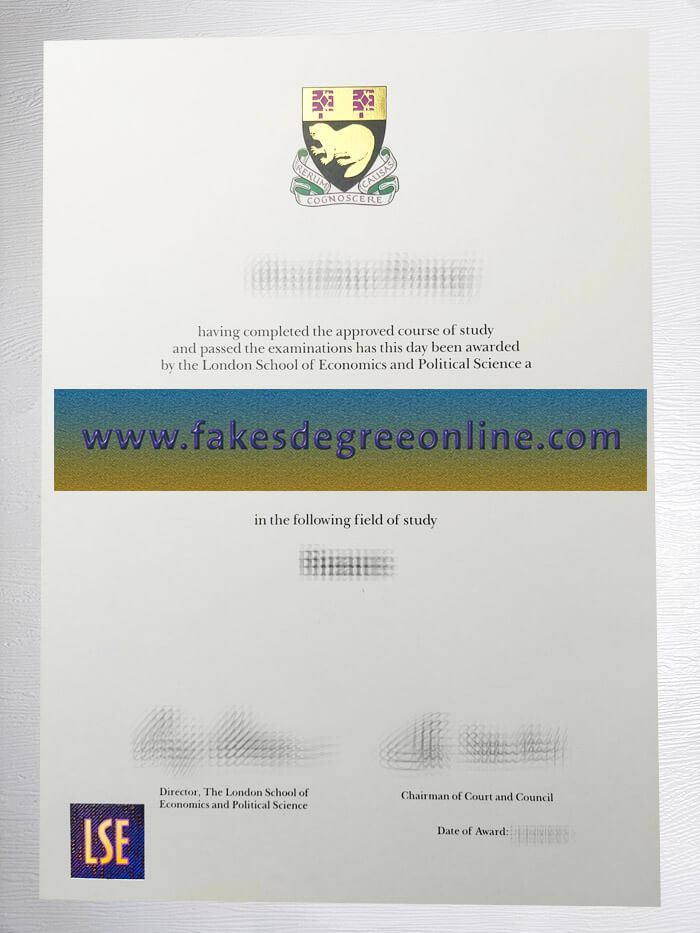
Founding (1895): Established through a bequest of £20,000 by core members of the Fabian Society—Sidney and Beatrice Webb—alongside Graham Wallas, George Bernard Shaw, and others. Classes commenced on October 10, 1895, in three classrooms on John Adam Street, London; initially operating as a night school catering to the working class, it enrolled 300 students in its first year. #Get a London School of Economics certificate online. Purchase LSE diploma online. In 1896, a library was established (which later evolved into one of the world’s leading libraries for political and economic sciences).
Incorporation into the University of London (1900): Officially became the Faculty of Economics within the University of London. In 1902, it awarded University of London degrees for the first time and relocated to its permanent campus site in Aldwych. On the eve of World War I, the student body had grown to 1,681, with women and international students accounting for a significant proportion. Where to buy London School of Economics diploma online?
A Golden Era of Development Between the Wars (1919–1939): In 1919, William Beveridge became Director, spearheading a massive expansion of both academic programs and campus facilities. In 1920, King George V laid the foundation stone for the main building on Houghton Street. In 1921, Lillian Knowles became LSE’s first female professor. In 1933, the School participated in efforts to rescue European scholars persecuted by the Nazis; in 1938, Arthur Lewis—a future Nobel Laureate in Economics—joined the faculty. During World War II, the School temporarily relocated to Peterhouse, Cambridge, before returning to London in August 1945. London School of Economics diploma, LSE degree, London School of Economics certificate.
Post-War Consolidation and Turmoil (1945–1980s): In the post-war era, the Beveridge Report served as the core blueprint for the British welfare state. During the 1950s and 1960s, academic disciplines underwent comprehensive deepening, leading to the establishment of departments such as Social Policy and Social Psychology. In 1968, a student protest movement erupted following a controversial appointment for the position of Director. The 1970s saw several scholars associated with the School awarded the Nobel Prize in Economics. In 1978, the library relocated to the Lionel Robbins Building. Independence and Internationalization in the New Millennium (2000–Present): In 2006, the institution was granted independent degree-awarding powers, and in 2008, it conferred its own degrees for the first time. The campus has undergone continuous renovation and expansion, including the addition of a new teaching building in 2008 and the Shaw Library and Student Centre in 2014. Its research impact has consistently ranked among the top tier in multiple UK Research Excellence Framework (REF) assessments, establishing it as a globally recognized powerhouse in social science research.