Chemnitz University of Technology: Saxony’s Hub for Microelectronics, Lightweight Engineering, and Digital Transformation
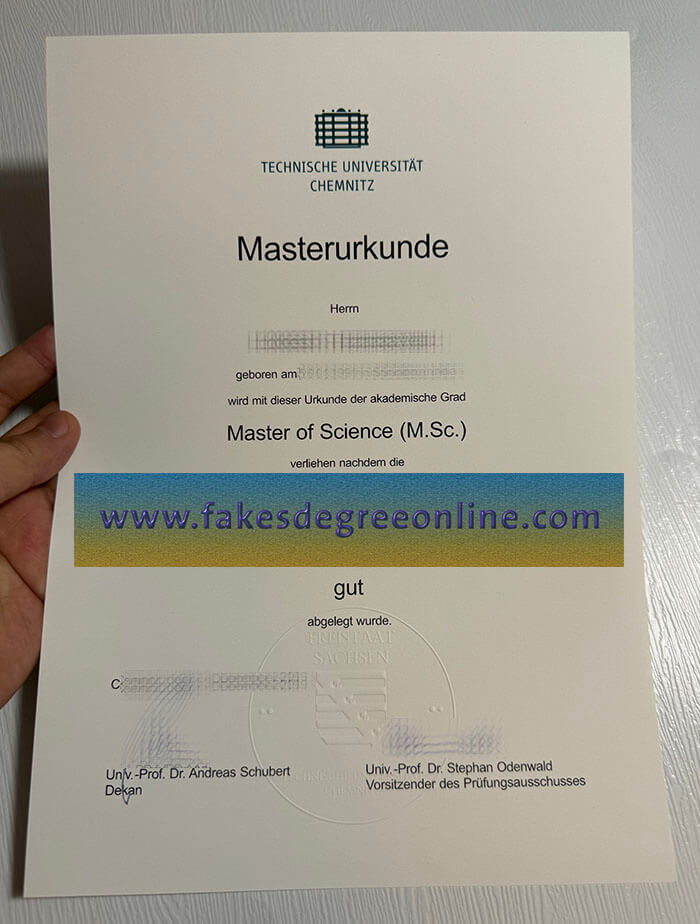
In the western part of the German state of Saxony lies a city that was once known as the “Saxon Manchester” – a powerhouse of the industrial revolution. Obtain a Technische Universität Chemnitz diploma online. Purchase a Technische Universität Chemnitz online. Today, Chemnitz is reinventing itself as a dynamic center for technology transfer, and at its intellectual heart stands the Chemnitz University of Technology (TUC). Founded in 1836, TUC is one of Germany’s oldest technical universities, yet it combines this rich heritage with a razor-sharp focus on modern, application-oriented research and internationalization.
A Tale of Two Revolutions: From Industrial Powerhouse to Digital Hotspot
The university’s history is deeply intertwined with Germany’s industrial and political transformations. Established as the Royal Vocational School of Chemnitz in 1836, its early mission was to train the engineers who would power Saxony’s booming machine-building industry. After German reunification in 1990, TUC underwent a profound modernization, pivoting from heavy engineering to become a recognized leader in microsystems technology, sensor systems, and materials science.
Today, TUC is not defined by size but by precision. It is a university where the journey from laboratory research to industrial application can be remarkably short – a defining feature of the “Chemnitz Model” of technology transfer.
Strategic Research: The Four Pillars of Excellence
TUC has organized its research strengths into four interdisciplinary profile lines, which form the core of its international reputation:
1. Microsystems, Sensors, and Nanotechnology (Saxony’s Silicon Heartland)
This is TUC’s undisputed flagship. The university is home to the Center for Microtechnologies (ZfM), one of Europe’s leading facilities for cleanroom and nano-analytics. Collaborating with global semiconductor giants like Infineon, Bosch, and Globalfoundries – all located in the nearby “Silicon Saxony” cluster – TUC drives innovation in smart sensors, MEMS (Micro-Electro-Mechanical Systems), and nanoelectronic materials.
2. Lightweight Structures and High-Performance Materials
TUC’s Institute of Lightweight Structures has made the university a key partner for the automotive and aerospace industries. Working with BMW, Volkswagen, Porsche, and Airbus, researchers develop carbon-fiber composites, metal foams, How long to buy Technische Universität Chemnitz diploma? and additive manufacturing (3D printing) techniques that make cars and planes lighter, safer, and more sustainable.
3. Digitalization and Smart Production (Industry 4.0)
The university’s “Factory for Digital and Agile Production” serves as a real-world laboratory for digital twins, autonomous robotics, and AI-driven process optimization. This facility is frequently used by small and medium-sized enterprises (SMEs) across Saxony to test digital transformation strategies before implementing them on their factory floors.
4. Human Behavior and Neuroscience in Technology
A unique strength at TUC is its Faculty of Behavioral and Social Sciences. Researchers here focus on cognitive ergonomics, human-machine interaction, and “neuro-adaptive technology” – systems that can read and respond to a user’s cognitive state. This is particularly relevant for developing safer autonomous vehicles and more intuitive medical devices.